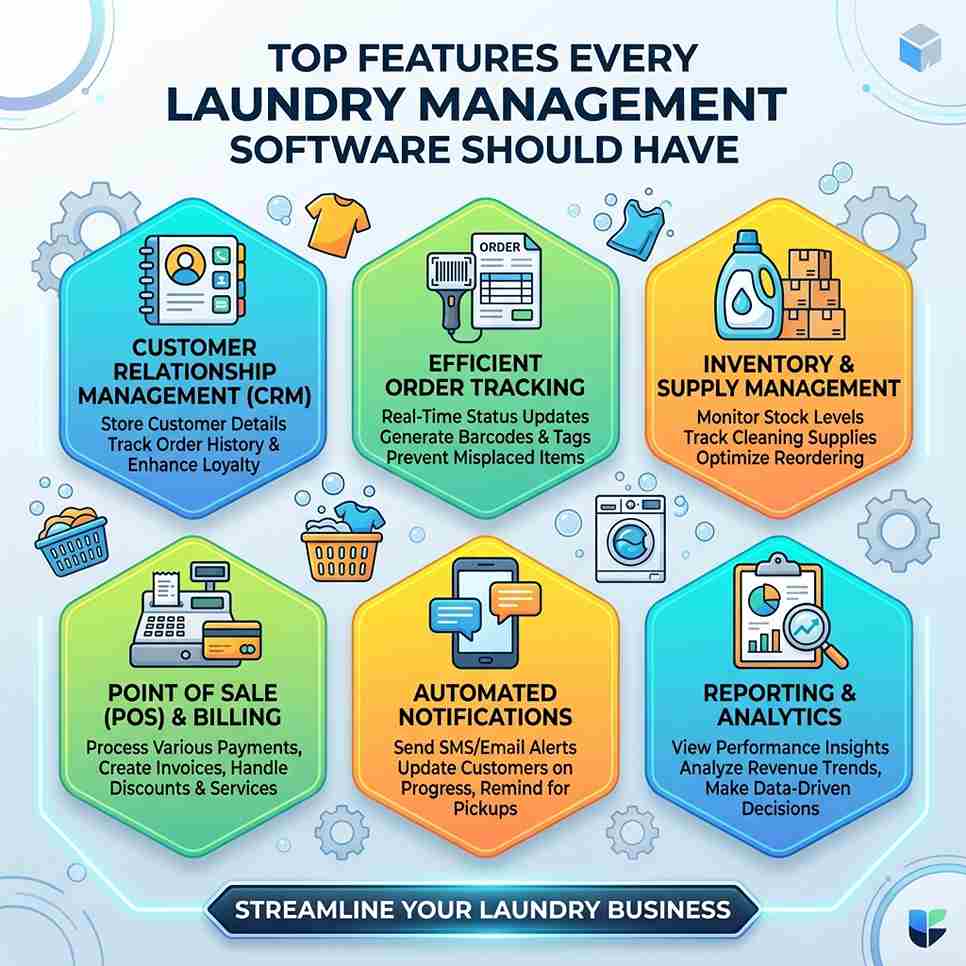
Top Features Every Laundry Management Software Should Have
10 Must Have Features in Laundry Management Software


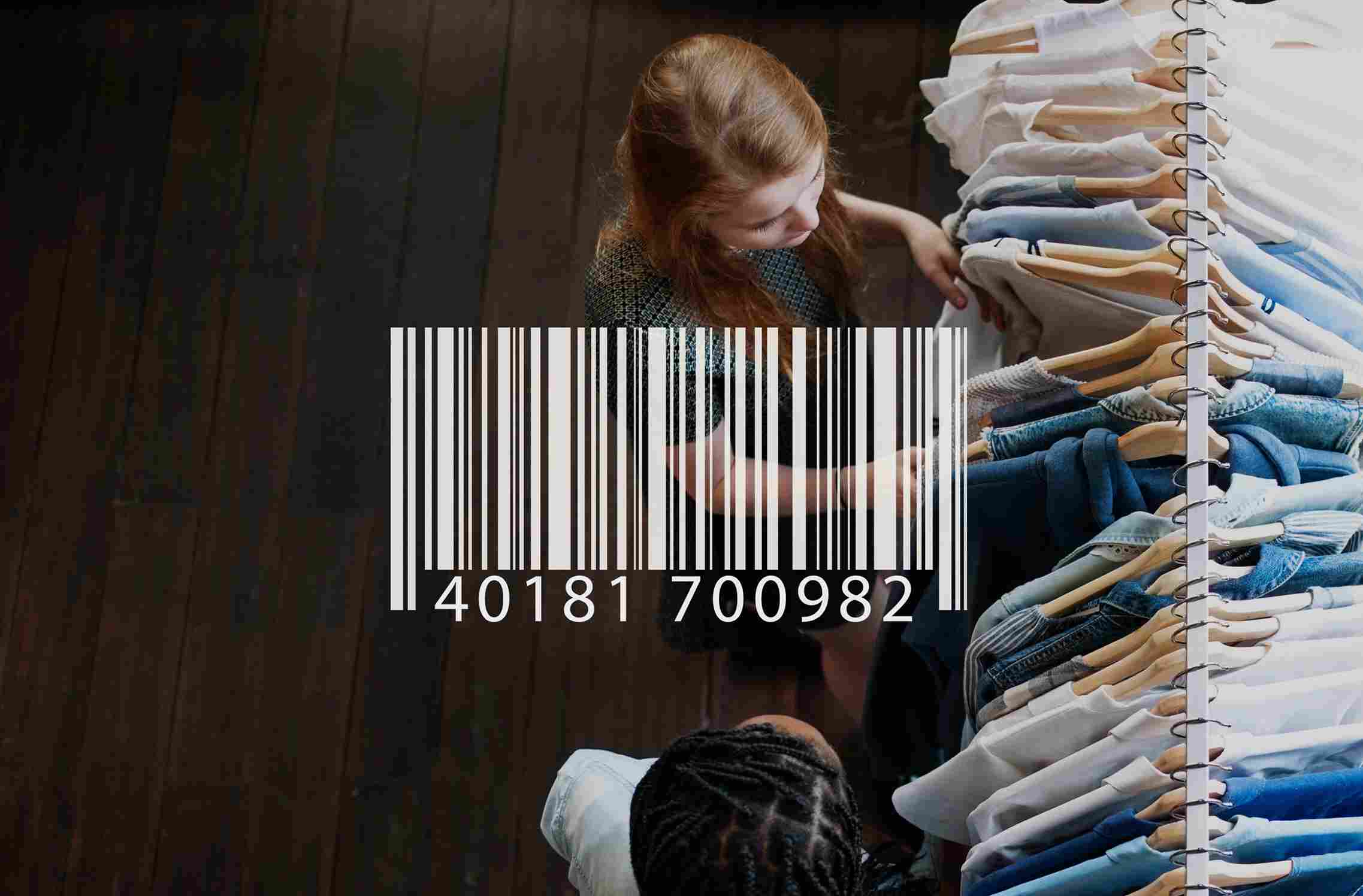
If you are evaluating modern laundry management software UK providers offer, barcode scanning is no longer a “nice to have” feature. In 2026, it is a core requirement for any serious dry cleaning or laundry business.
Manual tracking leads to errors, lost garments, and poor customer experience. Barcode-enabled systems solve this by giving every item a unique identity and tracking it through every stage of the process.
But not all barcode systems are built the same. Choosing the right one can mean the difference between smooth operations and daily chaos.
This guide explains exactly what to look for in laundry software with barcode scanning so you can make the right investment.
Barcode systems replace manual entry with fast, accurate scanning.
Eliminate manual errors in order handling
Track each garment individually
Provide real-time status updates
Reduce item loss and mix-ups
Studies show barcode tracking can reduce errors significantly and improve processing speed by up to 40 percent while lowering item loss.
Without barcode tracking, even small laundries struggle to manage 50 plus daily orders efficiently.
Not every laundry POS system with barcode support delivers real value. Focus on these must-have features.
The system should assign a unique barcode to:
Each garment
Each order
Each customer
This allows full traceability from intake to delivery.
👉 Why it matters:
You always know where an item is and who it belongs to.
Modern systems should support:
Android or iOS scanning apps
Handheld barcode scanners
Camera-based scanning
Mobile scanning allows staff to scan at every stage:
Pickup
Sorting
Washing
Packing
Delivery
This ensures real-time updates across operations.
A good system should instantly update order status when scanned:
Received
In process
Ready
Delivered
👉 This reduces customer calls and improves transparency.
Your software should automatically:
Generate unique barcodes
Print washable labels
Support QR codes if needed
Poor label formatting can cause scanning errors, so flexibility is critical.
Barcode scanning must be fully integrated with your:
Billing system
Order management
Inventory tracking
Disconnected systems create manual work and errors.
👉 Best systems combine barcode tracking with a full laundry booking system and POS.
Look for systems that support:
1D barcodes
QR codes
Custom formats
This ensures flexibility as your business grows.
A strong system should:
Prevent wrong item tagging
Validate scans against orders
Alert staff for mismatches
This is critical to avoid costly mistakes.
Barcode data should give insights such as:
Item loss rates
Processing times
Order accuracy
👉 Data-driven laundries outperform manual ones.
Many laundries compare barcode systems with RFID.
Lower cost
Easy to implement
Ideal for small to mid-size laundries
No manual scanning required
Bulk scanning of hundreds of items
Higher upfront cost
RFID can scan 200 plus items in seconds without line of sight, while barcodes require manual scanning one item at a time.
👉 Recommendation:
Use barcode for most UK dry cleaners
Consider RFID only for high-volume operations
Desktop-only systems slow down operations.
Cheap labels fade or fail during washing.
Without integration, your laundry delivery app cannot track items accurately.
Complex systems reduce staff adoption and increase errors.
Barcode scanning should be built into your workflow, not added later.
A mid-size dry cleaner in Manchester handling 80 orders per day switched from manual tracking to barcode-based laundry SaaS.
Results within 3 months:
90 percent reduction in lost items
30 percent faster processing
Significant drop in customer complaints
This shows how barcode scanning directly impacts profitability.
Barcode systems are evolving rapidly.
Businesses are combining both for better flexibility.
Smartphone scanning is replacing dedicated hardware.
Systems automatically detect mismatches and anomalies.
Larger operations are gradually moving toward RFID automation.
Barcode scanning is no longer optional in modern dry cleaning software. It is the foundation of accurate, efficient, and scalable laundry operations.
The right system will:
Eliminate errors
Improve speed
Increase customer trust
Enable delivery and automation
If your current system still relies on manual tracking, upgrading to a barcode-enabled solution is one of the fastest ways to improve your business.
When choosing laundry software in 2026:
Prioritise real-time tracking and mobile scanning
Ensure full integration with POS and delivery
Focus on ease of use and scalability
The best laundry management software UK businesses use today is not just about billing.
 WhatsApp Business Integration for UK Laundry Shops - What to Know in 2026
27 Apr 2026
For any business evaluating laundry management software UK providers o...
 Best Laundry Software with WhatsApp Notifications for UK Shops
27 Apr 2026
If you are evaluating laundry management software UK businesses rely o...
 Free Laundry Software vs Paid: True Cost Comparison for UK Dry Cleaners
25 Apr 2026
If you are searching for laundry management software UK businesses use...
 Best CleanCloud Alternatives for UK Dry Cleaners 2026
17 Apr 2026
Running a dry cleaning or launderette business in the UK gets harder e...
 Laundry EPOS Software UK 2026 Top Systems Compared
09 Apr 2026
Laundry EPOS Software UK 2026 Top Systems Compared
Barcode scanning helps track every garment accurately from drop-off to delivery. It reduces manual errors, prevents lost items, and speeds up the check-in and billing process, improving overall efficiency.
In 2026, good laundry software should support QR codes, traditional barcodes, and RFID integration. This flexibility allows businesses to scale operations and choose the most suitable tracking method.
Yes, modern laundry software should allow barcode scanning through mobile apps using smartphone cameras. This eliminates the need for expensive hardware and enables staff to manage orders on the go.
It ensures accurate order tracking, faster service, and real-time updates. Customers benefit from fewer mistakes, quicker turnaround times, and better transparency in their orders.
Look for features like real-time order tracking, automated status updates, POS integration, and reporting. These features ensure barcode scanning is fully utilized for operational efficiency and business insights.
10 Must Have Features in Laundry Management Software

There is a moment every laundry business owner dreads. A regular customer stops coming in. No complaint, no explanation, they just disappear. You assume they moved or got busy. But the truth, more often than not, is simpler and more fixable: the experience was not convenient enough, and someone else made it easier.
The laundry industry is evolving quickly as customer expectations continue to rise. Customers want faster service, better communication, easier booking experiences, and more convenience. Many laundry businesses still focus only on cleaning quality and delivery speed, but long term growth now depends on operational efficiency and digital experiences.