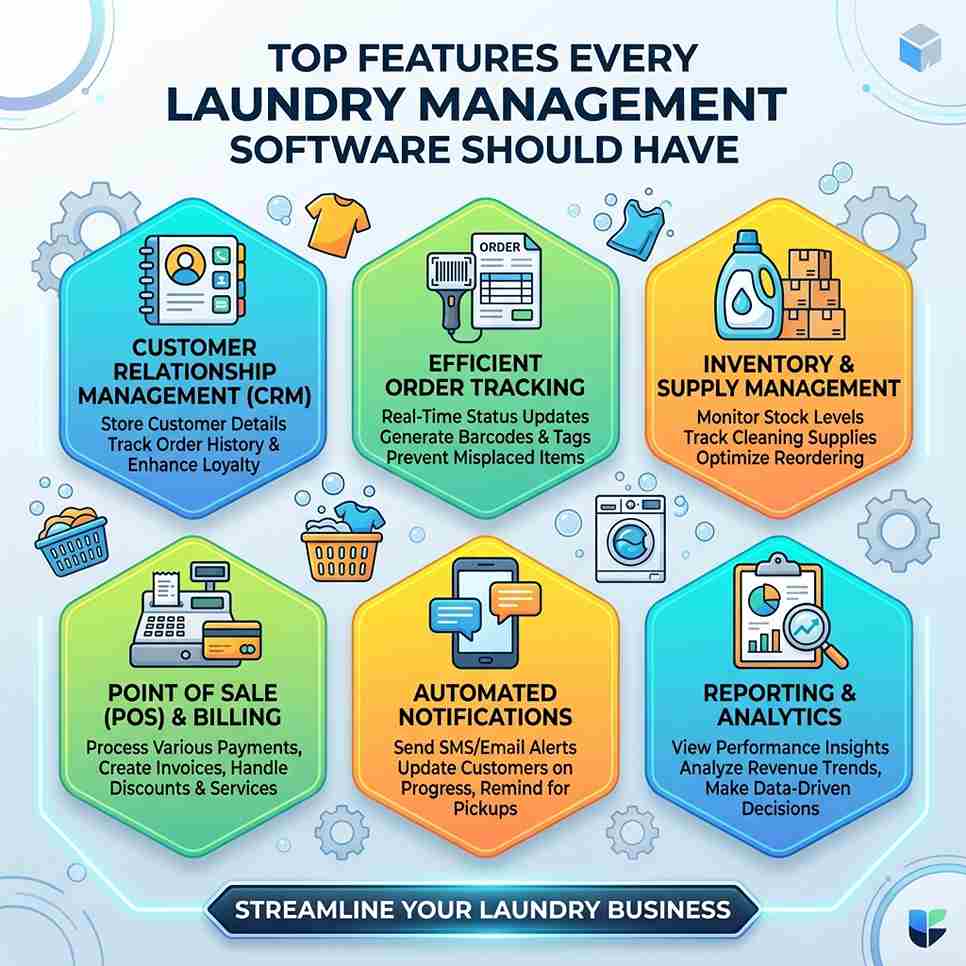
Top Features Every Laundry Management Software Should Have
10 Must Have Features in Laundry Management Software



If you are evaluating a laundry POS system or laundry management software UK providers offer, pricing can feel confusing. Some systems cost a few hundred pounds, while others run into thousands or monthly subscriptions.
The reality is simple. There is no fixed “market price” for a dry cleaning POS system in 2026. What you should pay depends on your business size, features required, and growth plans.
More importantly, the wrong pricing decision can cost you far more in inefficiency, missed orders, and poor customer experience than the software itself.
This guide breaks down real UK pricing, cost structures, and what you should actually pay based on your business stage.
Understanding pricing starts with knowing how POS systems are sold.
This is the traditional model.
Typical cost: £1,200 to £4,000 upfront
Includes terminal, printer, scanner, and basic software
Example:
Systems like EPOS packages range around £1,250 to £1,575 upfront
Best for:
Single-store dry cleaners
Owners who prefer no monthly fees
Limitation:
No cloud access
Limited automation
Paid upgrades later
This is the most common model in 2026.
Typical cost: £50 to £300 per month
Example:
Some UK POS solutions start around £35 per month with full features
What you get:
Cloud-based access
Automatic updates
Delivery management
Marketing tools
Multi-store support
Best for:
Growing laundries
Delivery-based businesses
Multi-location operations
Hardware: £1,000 to £2,000
Software: £50 to £150/month
Best for:
Businesses upgrading from legacy systems
Owners who want physical setup + cloud features
Not all POS systems are priced the same. Here’s what actually affects cost.
Basic setup includes:
Touchscreen terminal
Receipt printer
Tag printer
Cash drawer
Advanced setups with RFID or automation cost more.
Higher pricing usually includes:
Garment tracking
Laundry booking system
Delivery and route management
Customer notifications
Modern systems combine POS with dry cleaning software and automation tools.
Single store: lower cost
Multi-store: higher pricing due to complexity
Cloud systems scale pricing based on usage.
Adding a laundry delivery app increases cost but also revenue potential.
Systems with route optimisation and driver tracking are priced higher.
UK-based support, onboarding, and training are often included in premium systems.
Recommended Budget:
£1,200 to £2,000 upfront OR
£50 to £100/month
What you need:
Basic POS
Order tracking
Simple reporting
Avoid overpaying for features you will not use.
Recommended Budget:
£100 to £200/month
What you need:
Cloud POS
Delivery management
Customer notifications
Marketing tools
At this stage, investing in laundry SaaS is essential for growth.
Recommended Budget:
£150 to £300/month
What you need:
Multi-store dashboard
Route optimisation
Advanced analytics
CRM and loyalty tools
This is where the best laundry software becomes a growth engine, not just an expense.
Many business owners focus only on price.
But the real question is:
👉 How much revenue are you losing without the right system?
A modern POS system:
Tracks every garment accurately
Reduces errors and rework
Automates customer communication
Enables online booking and delivery
According to industry insights, modern EPOS systems significantly reduce admin time and improve operational efficiency for UK laundries
Even small improvements can generate:
More orders
Faster processing
Higher customer retention
Let’s break it down:
£150/month
+5 extra orders per day
Avg order value: £15
Revenue increase:
5 x £15 x 26 days
= £1,950/month
Software cost: £150
Revenue gain: £1,950
👉 Net gain: £1,800/month
This is why focusing only on price is the wrong approach.
Do not pay for:
Multi-store tools if you have one shop
Advanced analytics if you do not use data
Low-cost systems often lack:
Delivery features
Automation
Scalability
You end up switching later at a higher cost.
Generic POS systems miss key features like:
Garment tracking
Tag printing
Order workflow
Always choose dry cleaning software, not generic retail POS.
So, how much should you pay for a dry cleaning POS system in 2026?
👉 £50 to £300 per month for most UK businesses
👉 £1,200 to £4,000 if you prefer a one-time setup
But the real answer is not about cost.
It is about value.
 WhatsApp Business Integration for UK Laundry Shops - What to Know in 2026
27 Apr 2026
For any business evaluating laundry management software UK providers o...
 Best Laundry Software with WhatsApp Notifications for UK Shops
27 Apr 2026
If you are evaluating laundry management software UK businesses rely o...
 Free Laundry Software vs Paid: True Cost Comparison for UK Dry Cleaners
25 Apr 2026
If you are searching for laundry management software UK businesses use...
 Best CleanCloud Alternatives for UK Dry Cleaners 2026
17 Apr 2026
Running a dry cleaning or launderette business in the UK gets harder e...
 Laundry EPOS Software UK 2026 Top Systems Compared
09 Apr 2026
Laundry EPOS Software UK 2026 Top Systems Compared
In 2026, most UK dry cleaners pay between £50 and £300 per month for cloud-based POS systems. Traditional one-time EPOS systems can cost £1,200 to £1,600 upfront depending on hardware and setup.
Upfront systems seem cheaper long term, but they lack updates, automation, and flexibility. Monthly cloud systems cost more over time but provide continuous updates, remote access, and automation, making them more valuable for growing businesses.
Costs increase when you add features like barcode tracking, delivery management, CRM automation, and customer notifications. Advanced systems that combine POS with marketing and reporting tools are priced higher but reduce manual work and improve efficiency.
Yes. Common hidden costs include setup fees, payment gateway charges, SMS or WhatsApp messaging fees, and add-ons for advanced features. Some systems also charge for support or upgrades, which increases the total cost over time.
10 Must Have Features in Laundry Management Software

There is a moment every laundry business owner dreads. A regular customer stops coming in. No complaint, no explanation, they just disappear. You assume they moved or got busy. But the truth, more often than not, is simpler and more fixable: the experience was not convenient enough, and someone else made it easier.
The laundry industry is evolving quickly as customer expectations continue to rise. Customers want faster service, better communication, easier booking experiences, and more convenience. Many laundry businesses still focus only on cleaning quality and delivery speed, but long term growth now depends on operational efficiency and digital experiences.